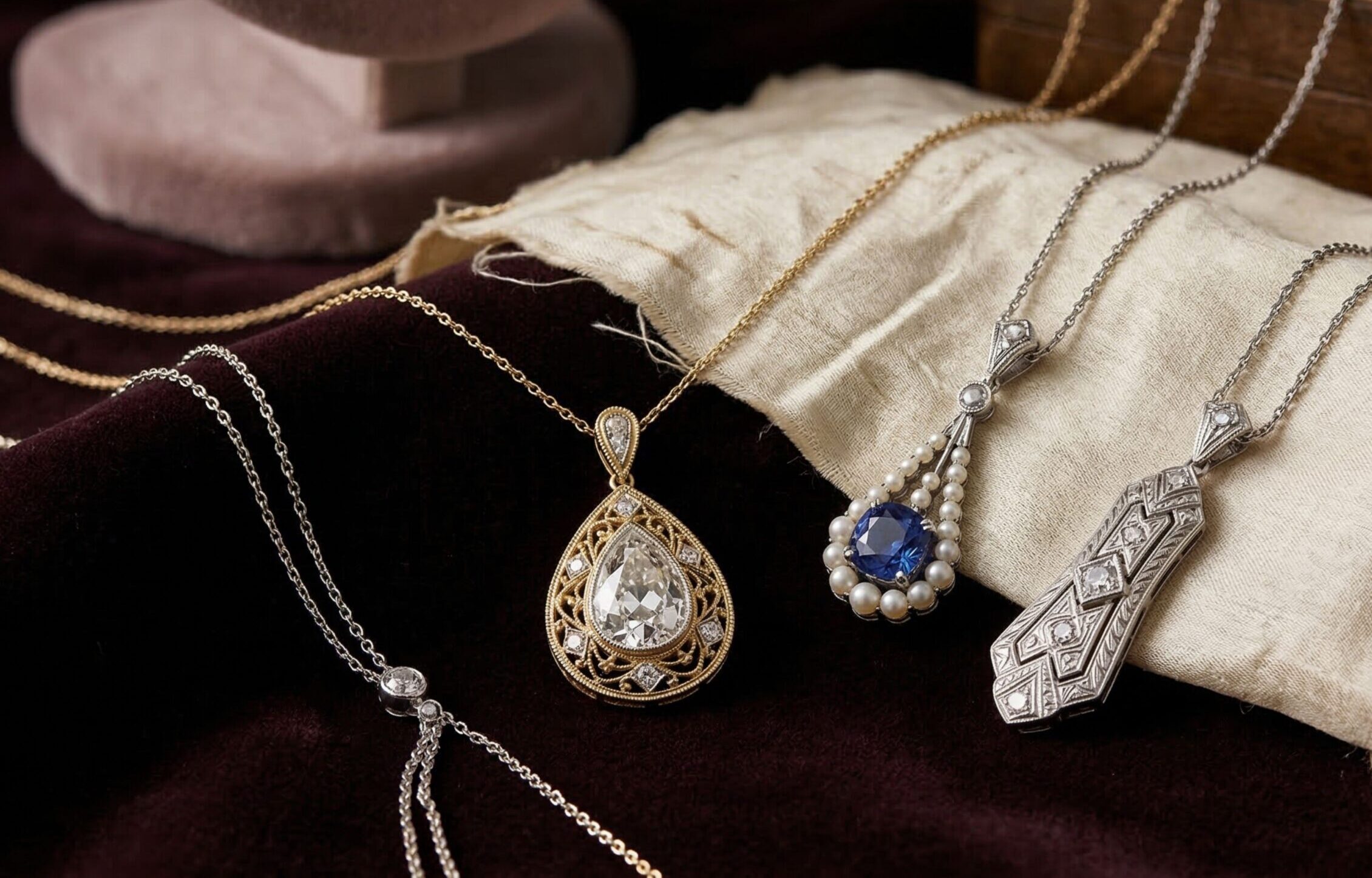
Older jewellery was made by hand and deserves gentle treatment. A few simple habits will keep antique and vintage pieces, and new silver too, looking their best for years, and help you avoid the mistakes that cause lasting damage.
Last on, first off
Put jewellery on after perfume, hairspray, make-up and hand cream, and take it off before washing up, cleaning, swimming, gardening or the gym. Chemicals, chlorine and knocks are the main causes of damage to stones and settings.
Store pieces separately
Harder stones such as diamonds and sapphires will scratch softer metals and gems if pieces are tossed together. Keep each item in its own soft pouch or a lined box with compartments, and hang or lay chains flat so they don’t tangle. Silver tarnishes faster in air and damp, so an airtight bag or anti-tarnish pouch helps a great deal.
Cleaning gold and hard stones
For gold set with hard stones such as diamonds, rubies and sapphires, a little warm water with a drop of mild washing-up liquid and a very soft brush is usually all you need. Rinse, then dry thoroughly with a soft, lint-free cloth. Never use toothpaste or abrasive cleaners, which leave fine scratches.
Cleaning silver
A silver polishing cloth removes light tarnish safely and quickly. Avoid silver dips on pieces with stones, and on designs that have been deliberately darkened (oxidised) to highlight their detail, as dips will strip that finish. For heavy tarnish on valuable antique silver, a professional clean is the safer choice.
Pieces that need extra care
- Pearls, opals, coral, turquoise and amber are soft or porous. Wipe them with a soft, damp cloth and never soak them.
- Emeralds are often oiled, so avoid hot water and soaking.
- Closed-back and foiled settings, common in Georgian and Victorian jewellery, should never be soaked: trapped water can ruin the foil behind the stone.
- Paste and marcasite stones are usually glued or set in ways that dislike water. Brush gently and keep them dry.
Be careful with ultrasonic cleaners
Ultrasonic cleaners are fine for solid gold with diamonds in good settings, but they can loosen old stones, crack fragile gems and damage pearls, opals, emeralds and anything glued. If in doubt, leave antique pieces out.
Check settings and clasps
Every few months, look closely at claws, clasps and jump rings. Gently tap a ring near your ear: a rattle means a stone may be loose. Worn claws and weak clasps are inexpensive for a jeweller to fix, and far cheaper than replacing a lost stone. A yearly professional check is worthwhile for pieces you wear often.
Find your next piece
Browse our antique and vintage jewellery, or our new handmade 925 silver jewellery from W J Sutton of Birmingham’s Jewellery Quarter.
Browse all jewellery →